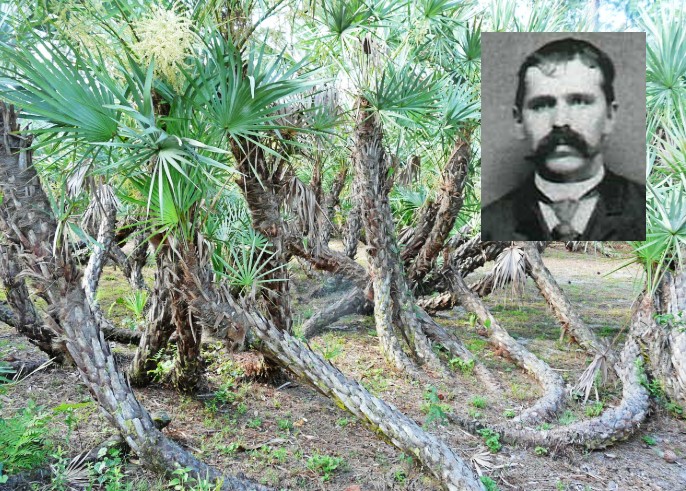
Washington G. Benedict ran a factory on McIntosh Street in Orange Park that turned palmetto leaves and pine needles into stuffing for mattresses, wagon seats and furniture.
The operation, detailed in a feature published Thursday, Nov. 5, by the Clay County Archives Center in Clay News & Views, is tied to a U.S. patent that places Orange Park at the center of a 19th-century Florida industry most residents have never heard of.
Benedict purchased the former Kingsley grant of roughly 9,000 acres in 1876 for $32,500 and renamed the settlement Orange Park, according to the National Register of Historic Places. He formed the Orange Park Company and hired a Boston surveyor to plat the town. Streets were named for early settlers and prominent visitors.
The patent
Benedict and his business partner, George F. Miller of Jacksonville, filed a patent application on Dec. 27, 1877. U.S. Patent No. 201,269 was granted on March 12, 1878. Its official title: "Improvement in Machines for Treating Palmetto-Leaves."
The patent described a machine that fed palmetto leaves through rollers and a series of knives spaced about three-eighths of an inch apart. A spinning drum with stripping pins then combed the split leaves into fine fibers. The goal, according to the patent, was to produce "an article of commerce similar to the curled hair used by upholsterers."
Miller was listed as assignor to Benedict, meaning Benedict held the patent rights.
A dollar a day
The palmetto factory gave local women a chance to work outside the home, according to the Clay County Archives Center. They earned a dollar a day gathering palm leaves and pine straw and preparing the material for the shredding machine.
The work was rough. Women wore leather gloves or wrapped thick rags around their fingers to avoid the needle-like "teeth" on palmetto stems. The Archives Center described the sting of those teeth as "like the poke of red-hot needles."
Benedict and Miller mixed pine needles into the stuffing for scent and what the Archives Center called "medicinal purposes." The pine resin helped keep bugs away.
A factory lost to time
The factory stood on McIntosh Street near what would later become the entrance to Moosehaven, the Loyal Order of Moose retirement community that has occupied a 63-acre campus on the St. Johns River since 1922.
How long the factory operated is unknown. The Clay County Archives Center noted that newer stuffing materials eventually replaced palmetto fiber, and the factory "became an Orange Park memory." Palmetto factories elsewhere in Florida were fire hazards. One burned down in Jacksonville, according to the Archives Center.
The patent expired on March 12, 1895. The Archives Center's full account, written by Peter Swanson, includes additional details about the palmetto industry across the state.